

Hey there! As a supplier of grid welding machines, I often get asked about what grid flexibility means after welding with our machines. So, I thought I'd take a few minutes to break it down for you.
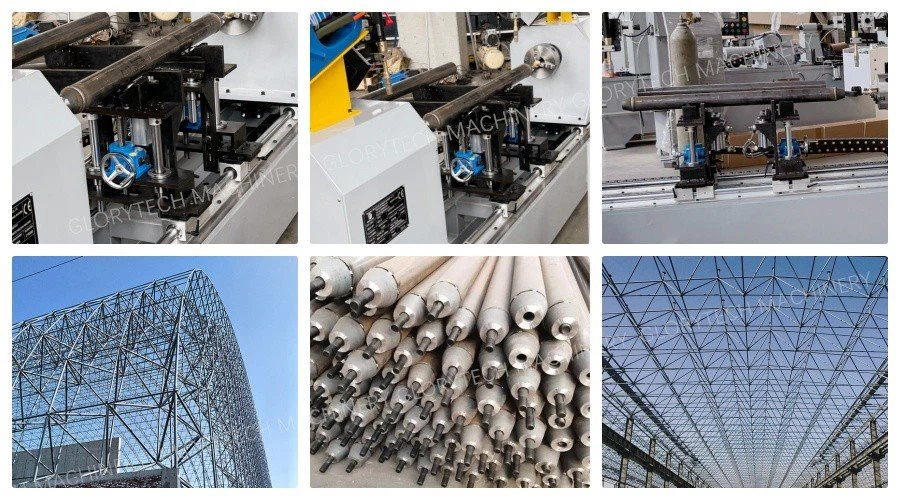
First off, let's talk about what a grid welding machine is. It's a piece of equipment that's used to weld wires together to form a grid, which can be used in a variety of applications like construction, fencing, and even in making furniture frames. We offer different types of these machines, such as the Automatic Grid Welding Machine, the Automatic Space Frame Welding Machine, and the Space Frame Pipe Welding Machine. Each one is designed to meet specific needs and can produce grids with different characteristics.
Now, onto grid flexibility after welding. Flexibility in this context refers to how much the welded grid can bend, stretch, or deform without breaking. It's an important factor because it determines how well the grid can withstand different types of stress in real - world applications.
There are a few key factors that affect grid flexibility after welding with our machines.
1. Type of Wire Used
The type of wire you're welding plays a huge role. Some wires are naturally more flexible than others. For example, stainless - steel wires are known for their good flexibility and corrosion resistance. They can bend quite a bit without cracking. On the other hand, high - carbon steel wires are stronger but less flexible. When you use our grid welding machines, you can choose the wire type based on the level of flexibility you need for your end - product. If you're making a grid for a decorative fence that won't be under a lot of mechanical stress, a more flexible wire might be a great option. But if you're using the grid in a construction setting where it needs to hold heavy loads, a stronger, less flexible wire could be the way to go.
2. Welding Parameters
The settings on our grid welding machines are crucial for achieving the right level of flexibility. Things like welding current, voltage, and welding time all matter. If the welding current is too high, the wire can become over - heated and brittle, which reduces flexibility. On the flip side, if the current is too low, the weld might not be strong enough. Our machines are designed to give you precise control over these parameters. You can adjust them according to the wire diameter and the type of grid you're making. For instance, when welding thin wires to create a more flexible grid, you'll typically want to use a lower welding current and a shorter welding time.
3. Grid Design
The design of the grid itself also impacts flexibility. A grid with a larger spacing between the wires is generally more flexible than one with a smaller spacing. This is because there's more room for the wires to move and bend. The way the wires are arranged, whether it's a simple rectangular grid or a more complex pattern, can also affect flexibility. For example, a grid with a diagonal wire pattern might be more flexible in some directions compared to a purely vertical - horizontal grid.
Let's dig a bit deeper into the benefits of having a flexible grid after welding.
1. Easier Installation
A flexible grid is much easier to install in tight spaces or on uneven surfaces. Say you're installing a grid fence along a curved path. A flexible grid can be bent to follow the curve without any major issues. This saves you time and effort during the installation process. You won't have to worry about cutting and re - welding the grid to fit the shape you need.
2. Better Shock Absorption
In applications where the grid might be exposed to impacts, like in a sports field fencing or in some industrial settings, a flexible grid can absorb the shock better. When an object hits the grid, the flexibility allows the wires to bend and distribute the impact force over a larger area. This reduces the risk of the grid breaking and can extend its lifespan.
3. Adaptability to Changing Conditions
The environment can change, and a flexible grid can adapt better. For example, in areas with extreme temperature variations, the grid can expand and contract without cracking. This is because the flexibility of the grid allows it to accommodate these changes in size. In contrast, a rigid grid might crack or break under the stress of thermal expansion and contraction.
Now, I know you might be thinking about how to test the flexibility of the grids produced by our machines. There are a few common methods.
Bend Test
One simple way is the bend test. You take a sample of the welded grid and gradually bend it to a certain angle. You then check for any signs of cracking or breaking. If the grid can withstand a reasonable amount of bending without damage, it has good flexibility.

Tensile Test
A tensile test involves pulling the grid in opposite directions to measure its ability to stretch. You can use a testing machine to apply a steady pulling force and record how much the grid elongates before it breaks. A higher elongation value indicates greater flexibility.
We've worked hard to optimize our grid welding machines to produce grids with excellent flexibility. Our research and development team is constantly experimenting with new techniques and settings to improve the end - product. And we've received great feedback from our customers who've used the grids in various applications.
So, if you're in the market for a grid welding machine, we offer high - quality options that can help you create grids with the right level of flexibility for your needs. Whether you're a small business owner looking to make custom fences or a large construction company in need of reliable grid materials, our machines are a great choice. If you have any questions or are interested in learning more about our products, don't hesitate to reach out to us. We're here to help you make the best decision for your project.
Let's start a conversation about how our grid welding machines can work for you. We can provide you with detailed information on how to achieve the perfect balance of strength and flexibility in your welded grids.
References
- Welding Handbook - American Welding Society
- Steel Wires and their Applications - Iron and Steel Institute